A more comfortable approach to breast imaging
QT imaging uses advanced ultrasound to create detailed true 3D images of the breast, without radiation, painful compression, or contrast injections.
What makes QT imaging different
No radiation
The QTscan uses sound waves instead of X-rays, so there is no ionizing radiation exposure.
No painful compression
There is no squeezing or flattening of the breast, which many women find far more comfortable.
No contrast or injections
No dyes, needles, or contrast agents are used anywhere in the imaging process.
True 3D imaging
The technology captures high-resolution 3D images, letting the radiologist evaluate the breast from multiple perspectives.
How the scan works
The QTscan uses transmission ultrasound to gather detailed information about breast tissue, one breast at a time.
- 1You lie comfortably face down on a specially designed scanning table.
- 2One breast is gently positioned in a warm water bath opening beneath the table.
- 3A scanning ring rotates around the breast, transmitting and receiving sound waves.
- 4Thousands of data points are collected to build detailed 3D images of the tissue.
- 5The process is then repeated for the other breast.
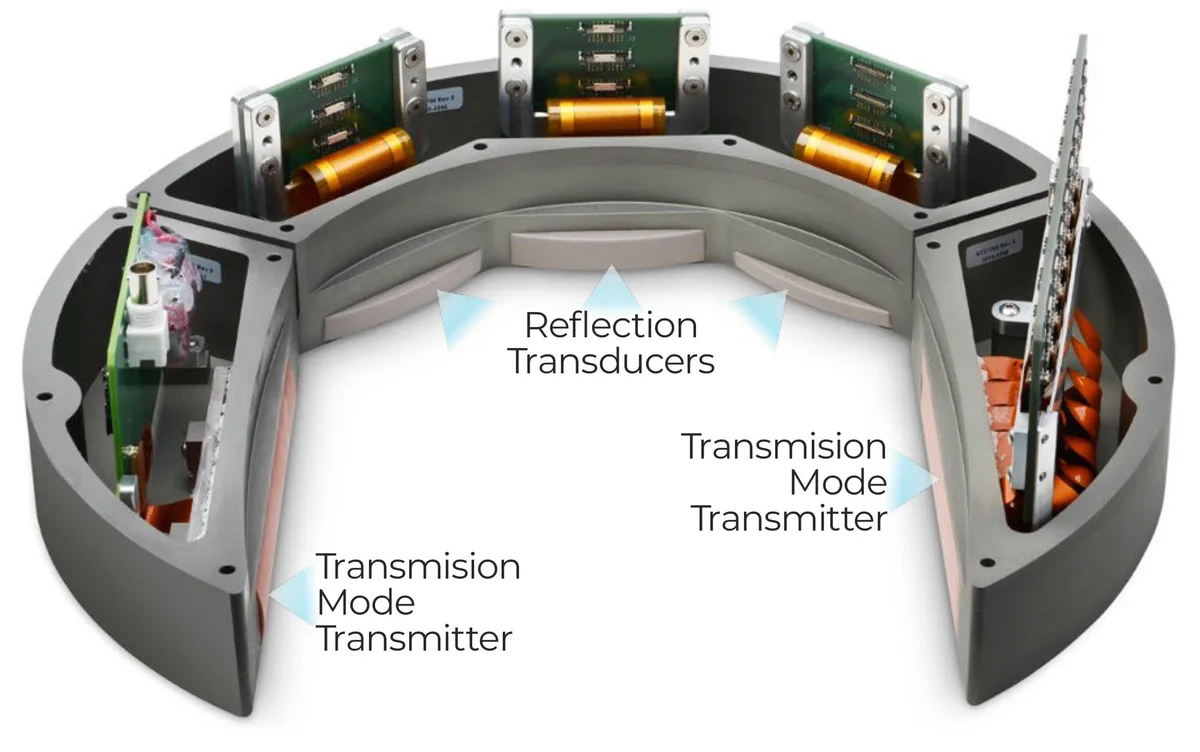
The scan head contains transmission and reflection ultrasound transducers that circle the breast.
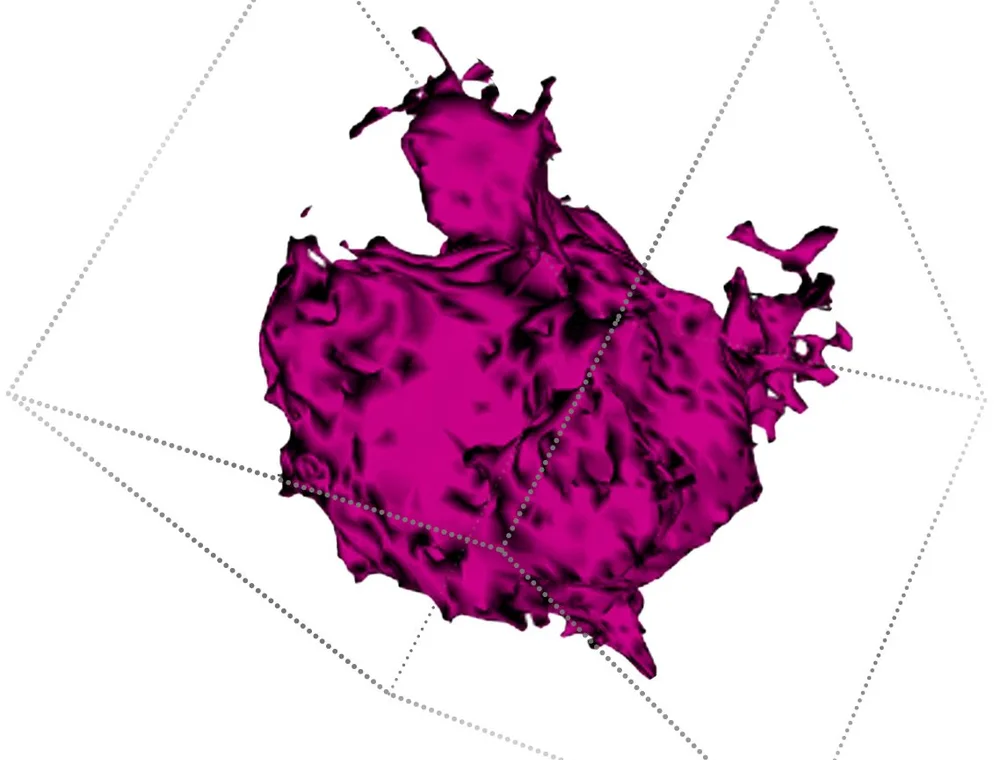
True 3D imaging, including dense tissue
Nearly half of women have dense breast tissue, which can make some imaging more difficult to interpret. QT technology creates detailed 3D images that help the radiologist better visualize different tissue structures, including dense tissue, from multiple perspectives.
Sound waves are fired through the breast from many angles, and the system precisely measures how those waves behave, how fast they travel and how much they weaken, to build a detailed 3D map of the tissue. Different tissue types have different acoustic properties, which makes them distinguishable, without any radiation.
Backed by a growing body of research
QT and transmission-ultrasound imaging are the subject of an active body of clinical and technical research. A few examples:
- 2025
Quantitative Transmission Imaging Compared With MRI as Supplemental Screening for High Lifetime Risk of Breast Cancer (QTIE Study)
Mayo Clinic Clinical Trial, Rochester, MN
- 2025
Toward data sparsification for 3D reflection imaging in QTI Breast Acoustic CT scanners
SPIE Medical Imaging 2025
- 2019
Full 3D transmission ultrasound and the identification of breast anatomical structures
SPIE, radiologic-pathologic validation
- 2016
QT ultrasound differentiates breast tissue types (skin, fat, glands, ducts, connective tissue)
Scientific Reports
Research is presented for general information about the technology and is not a statement about individual outcomes.
Request your appointment
No doctor’s referral needed. Tell us which scan you want and a few times that work, and our team will be in touch within one business day.
- Radiation-free and compression-free
- Read by a board-certified radiologist
- In North Dallas at Dallas, TX
Prefer to call? (469) 333-9022 · Monday to Saturday, 8 AM to 12 PM